Jaco van der Laan
Active filters:Semantic Layer ×Clear all

Your Data Model Is the Semantic Layer: Why Clean Metadata Beats AI Wrappers

BIRD Bench research reveals that well-structured data models achieve 95% SQL generation accuracy — without semantic layer tools BIRD Bench research reveals that well-structured data models achieve 95% SQL generation accuracy — without semantic layer tools MotherDuck’s analysis of the BIRD Benchmark — a rigorous SQL generation test — reveals a counterintuitive truth: “AI-ready data simply means a clean data model. Well-named tables, straightforward joins, and clear column names are enough for frontier LLMs to...
Read more

Fact-Based Modeling Meets Metadata-as-Code — Can FCO-IM Be the Semantic Backbone of Modern Data Architecture?

💡 How the principles of Fact-Based Modeling could strengthen the next generation of metadata-driven and AI-assisted data platforms. Over the past months, much of the discussion around data modeling has focused on tools — how legacy suites compare to Git-native environments, and how AI is reshaping the way we create and maintain models. But a comment from Marco Wobben (author and long-time advocate of Fact-Based Modeling and FCO-IM) reminded me that, before any tool or automation, there must be semantic...
Read more

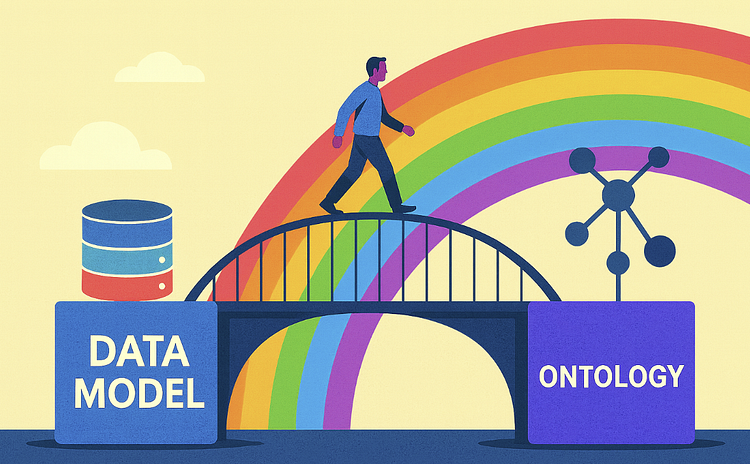
Bridging Ontology and Metadata — Toward Semantic Data Platforms

Why the future of data engineering lies in uniting structure with meaning In data engineering, we’ve long mastered the structure of data — tables, schemas, transformations, lineage. What we’ve struggled with is meaning. A recent piece by Michel Sauvage — “Ontology vs Data Model” — reignited an old but essential debate: Have we confused organizing data with understanding it? Sauvage reminds us that a data model organizes facts, while an ontology explains what those facts mean. A schema can ensure referential...
Read more

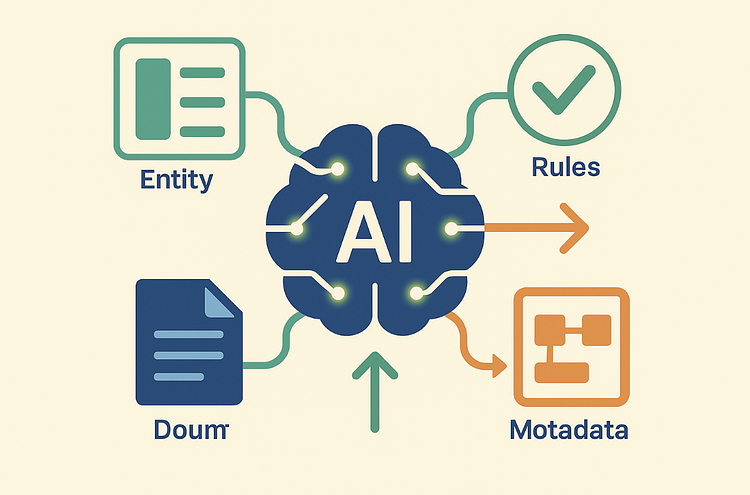
From Semantics to AI: How Metadata Knowledge Graphs Enable Intelligent Modeling

Using metadata, semantics, and AI to automate documentation and accelerate model design At this stage in the series, your metadata-driven framework has evolved into a self-aware ecosystem: YAML models define conceptual, logical, and physical layers. DuckDB catalogs and lineage graphs expose structure and quality. The semantic layer adds meaning, rules, and policy context. Now, the question is: how can we make this metadata work for us? The answer: by applying AI to interpret, generate, and...
Read more

Semantic Model, Ontology, and Knowledge Graph — Three Layers of Meaning in the Modern Data Landscape

Inspired by “Semantic Model vs Ontology vs Knowledge Graph: Untangling the Latest Data Modeling Terminology” by Cassi Hunt In recent years, the language of data modeling has grown richer — and more confusing. Terms like semantic model, ontology, and knowledge graph appear across architecture diagrams, vendor slides, and LinkedIn think pieces, often used interchangeably. Yet these concepts describe distinct — and complementary — layers of meaning in the modern data ecosystem. Understanding how they relate helps bridge business semantics with machine-readable...
Read more

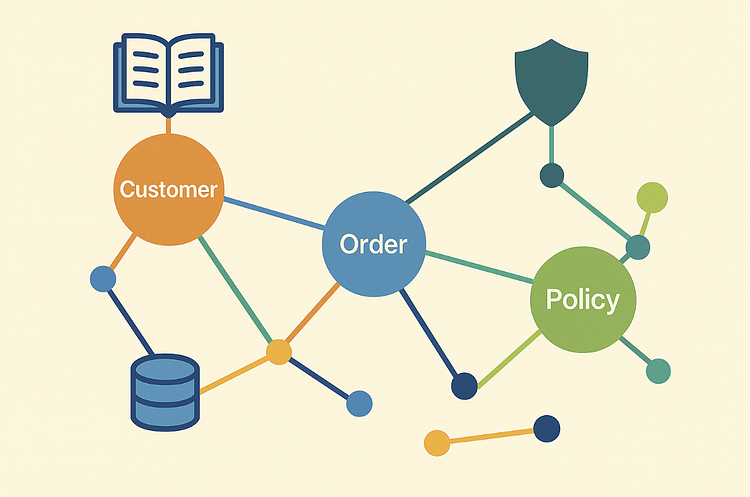
The Semantic Layer of Metadata

How to connect concepts, rules, and business meaning across your metadata mesh As we scale metadata-driven modeling across teams, we eventually hit a new challenge: We know how data flows — but do we know what it means? We can trace lineage and structure across thousands of tables, yet still struggle to answer basic business questions like: What exactly is a “Customer”? How does “Revenue” differ between domains? Which policies govern “Personal Data”? To solve this, we...
Read more

🧭 Inmon, Data Vault, and Palantir Ontology — Where They Overlap (and Where They Don’t)

How historization-first, model-driven data engineering extends classic warehousing and modern semantics. 💡 This article continues from Palantir’s Ontology, Kimball’s Star Schema, and Model-Driven Data Engineering: A Comparative View, responding to reader questions about how these approaches relate to Inmon’s 3NF and Data Vault — and how they look in practice. When I compared Palantir’s Ontology and Kimball’s Star Schema, several readers asked insightful follow-ups: “An Inmon-style data warehouse is in 3NF, with entities representing business objects and...
Read more

Beyond Palantir’s Ontology: The Paradigm, the Platform, and the Path to Open Semantics

From proprietary semantics to open metadata — understanding Ontology as a paradigm, not a product. When I published Palantir’s Ontology, Kimball’s Star Schema, and Model-Driven Data Engineering, several readers reached out with smart questions: “Is Palantir’s Ontology a product or a modeling paradigm?” “Can you use the Ontology concept outside of Foundry?” “How does your model-driven approach compare to the Ontology itself, not just to Palantir?” Let’s unpack these — because understanding what Ontology really means in Palantir’s...
Read more

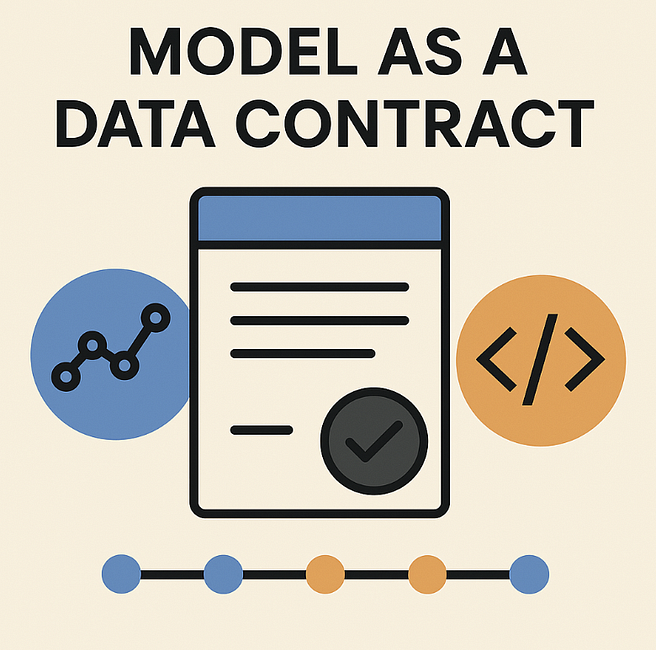
🧩 From Model-Driven to Contract-Driven: The Next Step in Semantic Data Engineering

How data models evolved from descriptive blueprints to enforceable agreements between producers and consumers For decades, data modeling meant describing reality — identifying entities, defining relationships, and creating diagrams that visualized structure. But in today’s metadata-driven world, the model’s purpose has changed. A modern model is no longer just a representation of data — it’s a contract that encodes expectations, semantics, and quality boundaries. It doesn’t only describe what data looks like; it defines what must be true for data to...
Read more