Jaco van der Laan

Expertise · Data modeling

Models start with the business, not the database.

Most modeling debates are about method. Mine starts with the business: what does this data mean, and how does it change over time? From there I choose — dimensional, ensemble, 3NF, bi-temporal — the shape that fits, not the one the methodology demands.
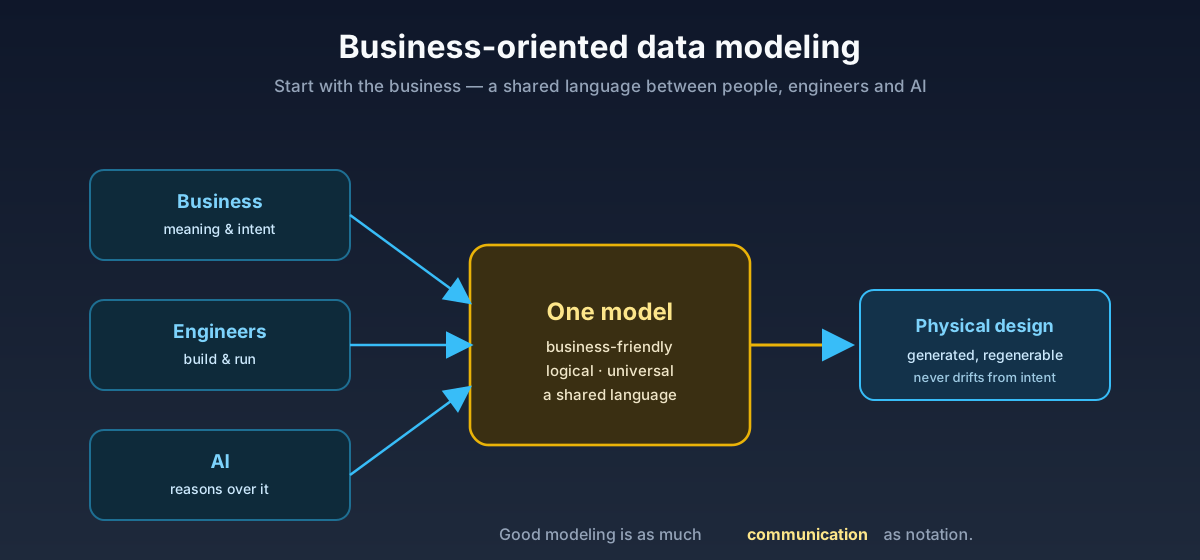
Business-oriented data modeling with dimensional, ensemble, 3NF and bi-temporal SCD2 as shapes chosen for the job
Business meaning first; the modeling shape is chosen for the job, not the dogma.

The ideas behind it

What makes my approach different.

Business-oriented over method-oriented

An integration layer that sits between Kimball simplicity and Data Vault auditability — 3NF plus SCD2, shaped around business meaning, readable by the people who actually own the data.

Dual SCD2 (bi-temporal) = bank-grade history

Transaction time plus valid time gives a full, reproducible audit trail — better than classical SCD2 for modern platforms where you must answer: what did we know, and when?

Dimensional thinking still matters

Kimball did not go away — dimensional thinking still shapes how analytics layers should look. I fold those lessons into a metadata-first approach instead of treating them as legacy.

Ensemble vs business-oriented — two valid paths

Ensemble modeling (Hultgren) is brilliant; business-oriented modeling is often simpler without the ensemble complexity. Both are valid — the choice is pragmatic, not tribal.

From the writing

Modeling, worked out in the open.

My Data Vault stance →   Read the archive →

Not sure which modeling approach fits your data?

That is the question I love — let us start from what the business means and work down to the model.

Start a conversation