Jaco van der Laan
Active filters:Data Modeling ×Clear all

Beyond Tools: Metadata-Driven Modeling as a Shared Language Between Business, Engineers, and AI

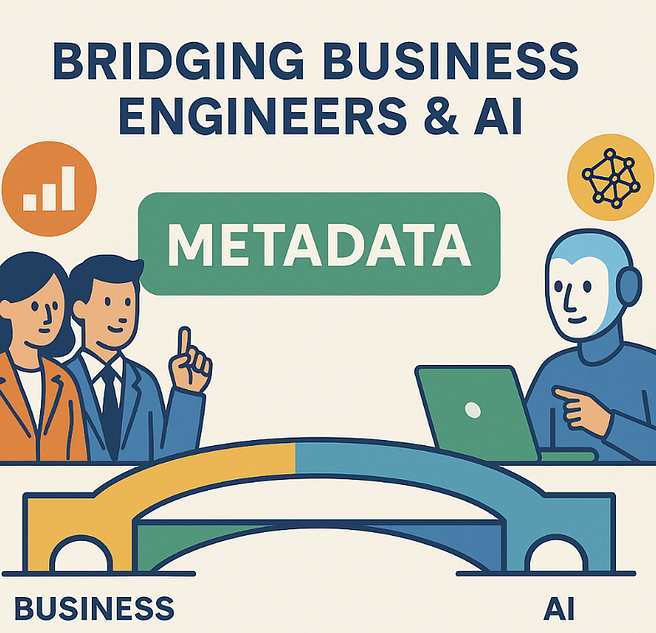
💡 From debate to convergence — how the data community is redefining modeling for the metadata and AI era. When I asked whether we still need traditional data modeling tools, I expected opinions. What followed was something richer — a thoughtful, cross-disciplinary conversation between data modelers, architects, tool builders, and AI enthusiasts. The responses revealed a shared realization: Modeling is not dying — it’s evolving. Traditional tools like [[PowerDesigner]], [[ERwin]], and [[ER/Studio]] gave us structure and...
Read more
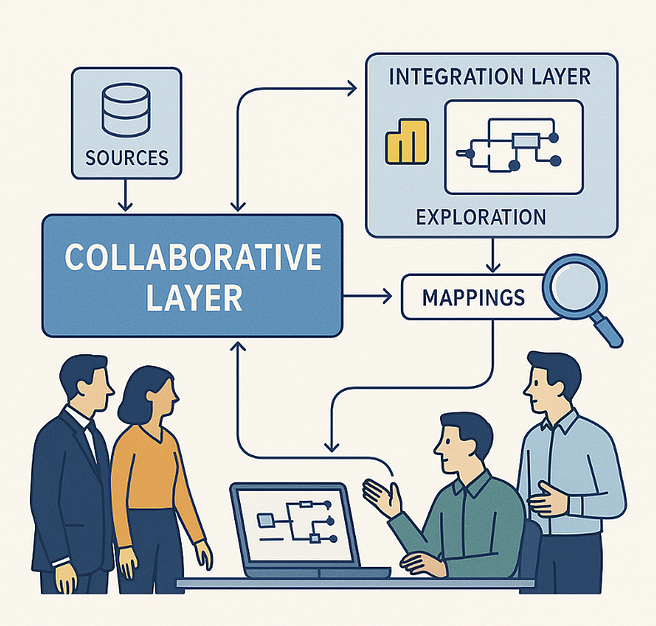
🧩 The Collaborative Layer: Where Business and Data Engineering Meet

Creating a Shared Space for Data Understanding and Co-Creation In [[model-driven data engineering]], [[collaboration]] between business and technical teams often starts too late — after pipelines are built and logic is locked in. The [[Collaborative Layer]] changes that: a controlled environment where data modelers and business users co-create [[mappings]], explore source data, review intermediate transformation results, and validate logic together using familiar tools like [[Power BI]]. It’s a bridge between [[data transparency]] and [[semantic understanding]], turning model development into a...
Read more

Bringing Requirement Modeling into Metadata-Driven Data Architecture

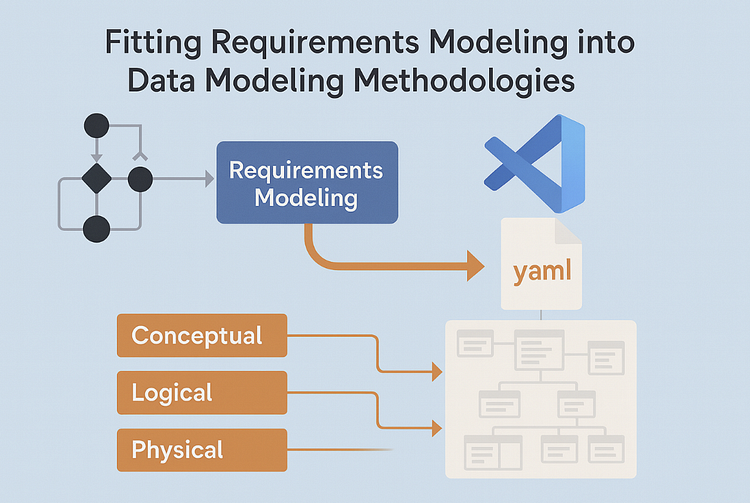
From UML and PowerDesigner roots to YAML-based modeling in VSCode Modern data architecture has evolved rapidly. We’ve moved from hand-crafted SQL to metadata-driven frameworks, where YAML files and declarative logic generate the data platform itself. We’ve learned to describe conceptual, logical, and physical models as metadata-as-code, feeding automated engines that generate tables, pipelines, and tests. But one crucial layer is often missing: Requirements. Where do business requirements live? How are they linked to conceptual entities...
Read more

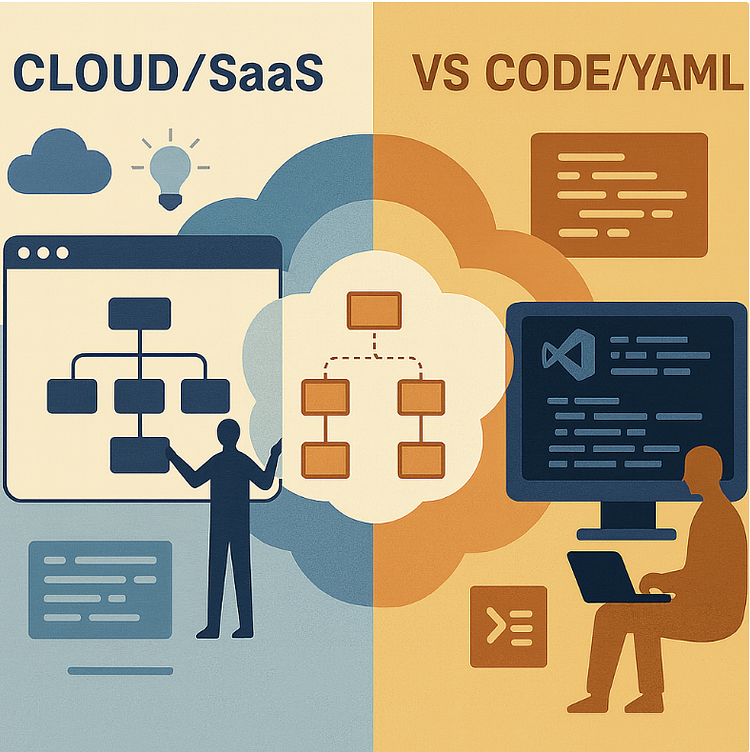
Cloud Tools vs. Code-Based Modeling — What We Can Learn from SqlDBM

How the rise of collaborative cloud modeling tools complements the metadata-as-code movement 🧩 Metadata-Driven Modeling Series A continuing exploration of how modern data platforms connect business meaning and technical implementation through metadata-as-code. 1️⃣ From Business Concepts to Database Blueprint 2️⃣ Linking Conceptual and Logical Data Models in Metadata 3️⃣ Scaling Metadata-Driven Data Modeling — From Conceptual to Physical with Git and YAML — coming soon 4️⃣ Cloud Tools vs. Code-Based Modeling — What We Can Learn from SqlDBM (this article) 5️⃣...
Read more

Historizing Data with Conditional Primary Keys

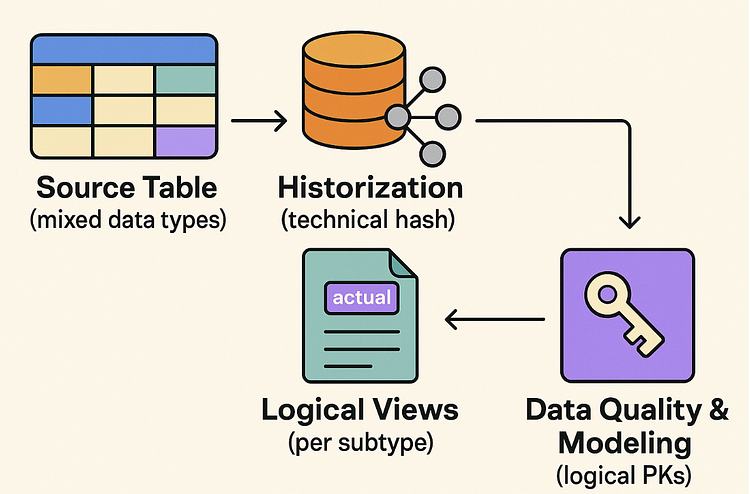
How to keep bi-temporal historization reproducible when the source’s primary key is conditional, incomplete, or context-dependent. 🧩 Part of the Model-Driven Data Quality series — exploring reproducible, metadata-driven patterns for historization, deduplication, and bi-temporal data management. In my previous article, Historizing Source Tables Without a Primary Key, I showed how we can build a reproducible, bi-temporal SCD2 pattern using technical hash keys instead of relying on source-defined primary keys. But real-world data rarely fits neatly into theory....
Read more

Semantic Model, Ontology, and Knowledge Graph — Three Layers of Meaning in the Modern Data Landscape

Inspired by “Semantic Model vs Ontology vs Knowledge Graph: Untangling the Latest Data Modeling Terminology” by Cassi Hunt In recent years, the language of data modeling has grown richer — and more confusing. Terms like semantic model, ontology, and knowledge graph appear across architecture diagrams, vendor slides, and LinkedIn think pieces, often used interchangeably. Yet these concepts describe distinct — and complementary — layers of meaning in the modern data ecosystem. Understanding how they relate helps bridge business semantics with machine-readable...
Read more

🧭 Inmon, Data Vault, and Palantir Ontology — Where They Overlap (and Where They Don’t)

How historization-first, model-driven data engineering extends classic warehousing and modern semantics. 💡 This article continues from Palantir’s Ontology, Kimball’s Star Schema, and Model-Driven Data Engineering: A Comparative View, responding to reader questions about how these approaches relate to Inmon’s 3NF and Data Vault — and how they look in practice. When I compared Palantir’s Ontology and Kimball’s Star Schema, several readers asked insightful follow-ups: “An Inmon-style data warehouse is in 3NF, with entities representing business objects and...
Read more

Scaling Metadata-Driven Modeling Across Teams

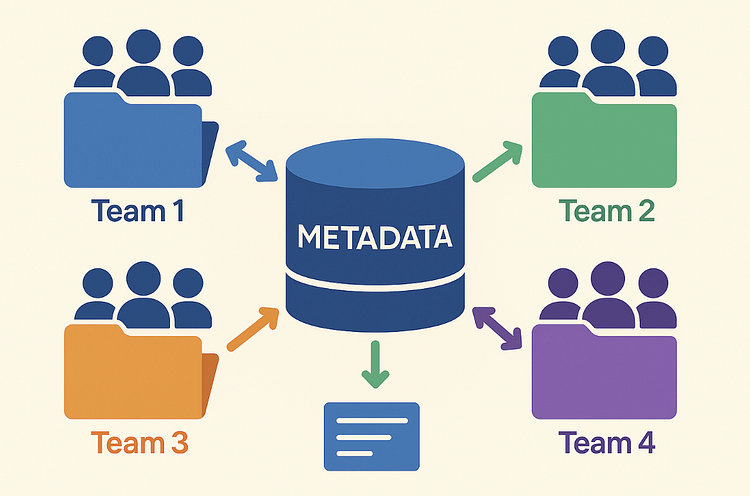
How to balance autonomy and consistency in a federated data architecture Over the previous ten articles, we’ve built a complete metadata-driven modeling framework — from conceptual models to physical automation, complete with lineage, quality, and maturity metrics. But in most real organizations, data modeling isn’t the work of a single architect. It’s distributed across teams, domains, and departments. The challenge now is: How can we scale metadata-driven modeling without losing coherence? This article explores practical patterns for...
Read more

Generating Logical Models Automatically from Conceptual Metadata

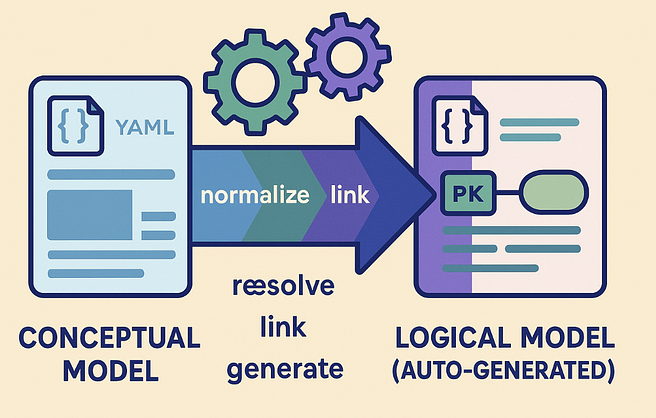
How to translate business concepts into normalized data structures using Python and YAML In the first two parts of this series, we explored how to: 1️⃣ Capture business concepts in a Conceptual Data Model (CDM) 2️⃣ Maintain lineage between conceptual and logical models in YAML metadata Now, we’ll take the next step: automating the transformation from conceptual to logical. This article shows how to implement Alec Sharp’s normalization process — the same reasoning a skilled data modeler applies manually — using a Python-based...
Read more

From Business Concepts to Database Blueprint: Bridging Conceptual and Logical Data Models in a Metadata-Driven World

How to connect business understanding with technical precision by transforming conceptual data models into logical blueprints within a metadata-driven framework — Inspired by Alec Sharp’s Business-Oriented Data Modelling Masterclass A series exploring how modern data platforms connect business meaning and technical implementation using metadata-as-code. 1️⃣ From Business Concepts to Database Blueprint — bridging conceptual and logical models inspired by Alec Sharp. 2️⃣ Linking Conceptual and Logical Data Models in Metadata — maintaining traceability and automation between business concepts and...
Read more
1 2 3 4 … 14