Jaco van der Laan
Active filters:Data Modeling Tools ×Clear all

From Drawing to Generation — How Mermaid, Draw.io, PlantUML, GraphViz, and yEd Redefine Data Modeling Visualization

💡 Why modern metadata-driven teams no longer draw diagrams — they generate them. In classic data modeling, diagrams were the main artifact — we used tools like PowerDesigner or ERwin to draw boxes and lines, define relationships, and label attributes. The visuals were the models. Today, that relationship has flipped. In metadata-driven environments, the model comes first, and the diagram is a view — automatically generated from the underlying metadata. This shift — from drawing to generating — may...
Read more

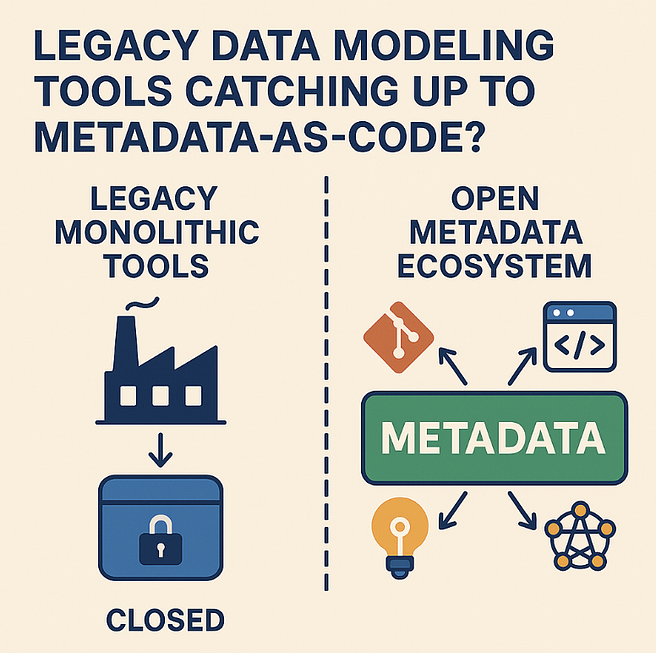
Are Legacy Data Modeling Tools Catching Up to Metadata-as-Code?

💡 [[Legacy modeling tools]] are modernizing fast — but can they really compete with open, Git-native, AI-assisted metadata ecosystems? When I asked whether we still need traditional data modeling tools, I expected mostly practitioner reactions. What surprised me was how strongly tool vendors themselves joined the conversation. Executives from [[SqlDBM]], [[Hackolade]], Ellie.ai, and even erwin Data Modeler (erwin DM) responded — each confirming that the industry is moving toward metadata-driven, Git-integrated, and AI-assisted modeling. That’s a positive sign. It shows that the discussion is...
Read more

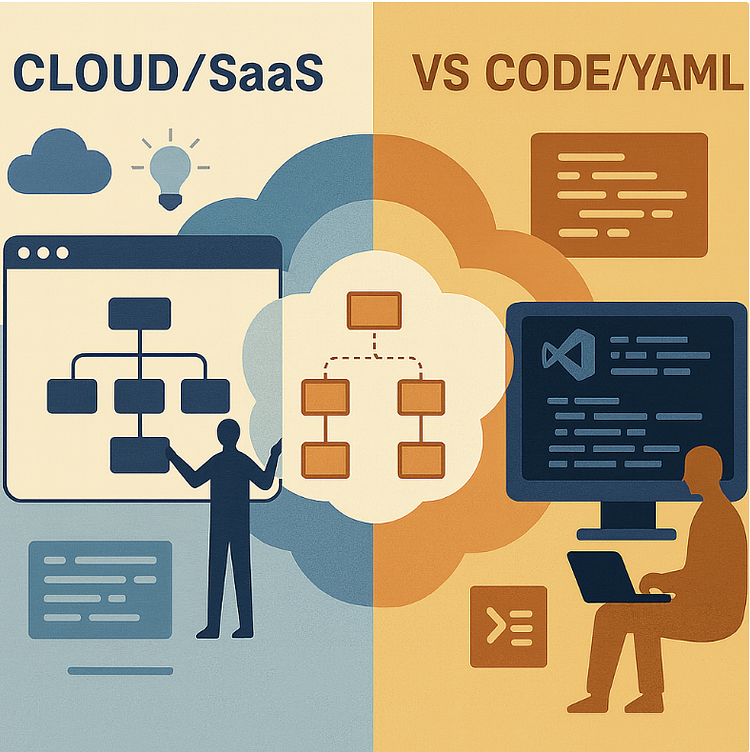
Cloud Tools vs. Code-Based Modeling — What We Can Learn from SqlDBM

How the rise of collaborative cloud modeling tools complements the metadata-as-code movement 🧩 Metadata-Driven Modeling Series A continuing exploration of how modern data platforms connect business meaning and technical implementation through metadata-as-code. 1️⃣ From Business Concepts to Database Blueprint 2️⃣ Linking Conceptual and Logical Data Models in Metadata 3️⃣ Scaling Metadata-Driven Data Modeling — From Conceptual to Physical with Git and YAML — coming soon 4️⃣ Cloud Tools vs. Code-Based Modeling — What We Can Learn from SqlDBM (this article) 5️⃣...
Read more

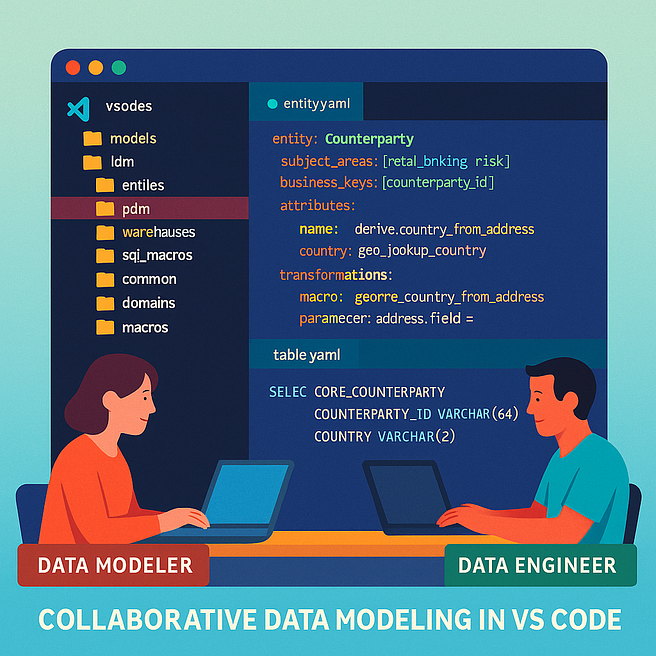
Collaborative Data Modeling in VS Code — Bridging Modelers and Engineers through Metadata

A modern metadata-driven development workflow where data modelers define logic and semantics declaratively, while data engineers operationalize these definitions in SQL and Jinja macros. Powered by VS Code, JSON validation, and language-server intelligence, this approach unites modeling and engineering into a single semantic DevOps loop. Summary Treat models as code. Data modelers express business meaning, structure, and mappings in YAML; data engineers build reusable macros and SQL templates that translate these definitions into executable code. Both collaborate...
Read more

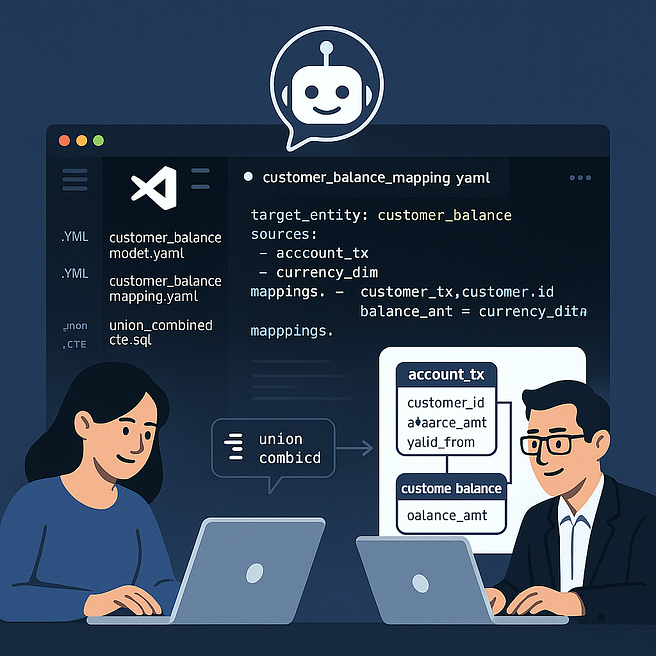
Beyond Migration: Copilot-Assisted Data Modeling in VS Code

How we’re extending AI assistance from SQL migration to metadata-driven modeling, documentation, and collaboration. 💡 Summary Our rule engine and metadata framework taught us something important: AI can do more than refactor SQL — it can help build data models, mappings, and documentation if we give it the right context. The next step in our journey is to bring this capability directly into the workspace where business developers and data modelers collaborate every day: VS Code with Copilot. By...
Read more

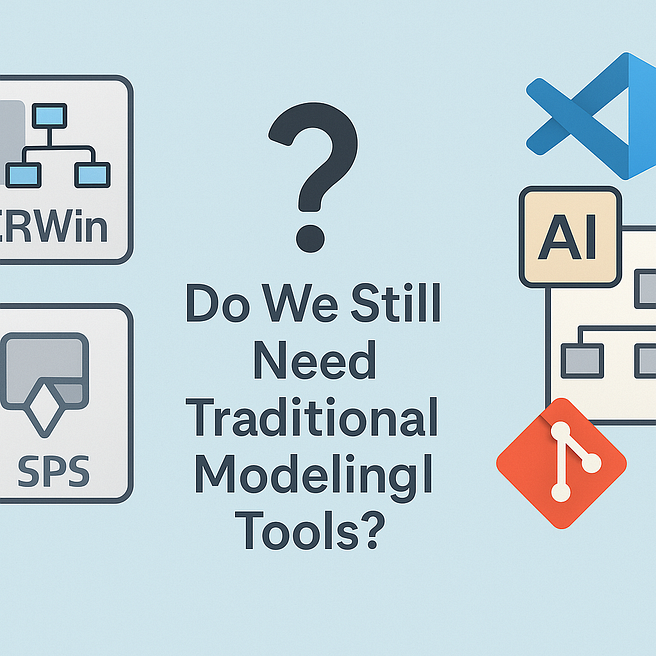
Do We Still Need Traditional Data Modeling Tools?

Why VS Code, Python, AI, and Git-based metadata workflows might replace PowerDesigner, ERwin, and ER/Studio. 💡 Summary For decades, enterprise data modeling relied on heavyweight tools like PowerDesigner, ERwin, and ER/Studio — specialized environments with rich diagramming and repository features. But as metadata, automation, and AI evolve, we’re seeing a quiet shift: modeling is becoming code. In this article, I explore whether we still need these classic tools — and how a modern, open workflow using VS Code,...
Read more

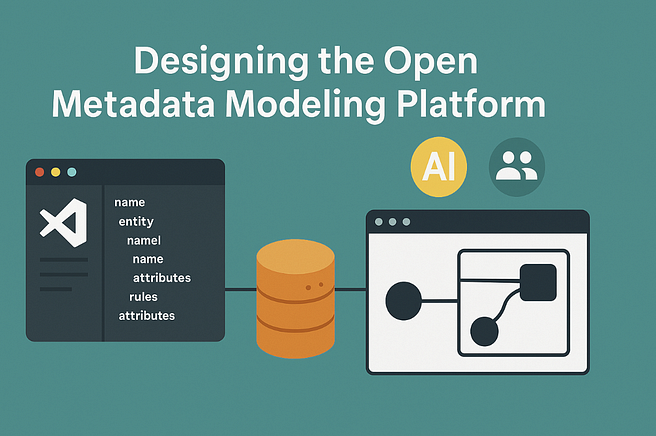
🧱 Designing the Open Metadata Modeling Platform

Series: Choosing the Right Data Modeling Tool in the Era of Metadata Engineering In the first two articles of this series, we explored how: 🔹VS Code and YAML can serve as the foundation for metadata-driven design. 🔹Dedicated modeling tools still play a crucial role for visualization, validation, and governance. Now we’ll look forward — beyond evaluating today’s tools — to designing the open modeling platform of the future. One that merges the flexibility of code with the structure and semantics...
Read more

CrossBreeze and the Future of Model-Driven Data Engineering

Why tools, philosophy, and bright people matter for building tomorrow’s data platforms At de Volksbank/ASN, we proved that Model Driven Data Engineering (MDDE) works in practice. A key enabler was CrossTest, CrossBreeze’s automated testing framework, together with the open-source PowerDecomposer, which allowed us to extend PowerDesigner into a metadata-driven workflow. The lessons from this project — and from other customers — directly inspired the development of CrossModel and CrossGenerate, modern tools built to replace legacy modeling environments and automate code generation....
Read more