Jaco van der Laan
Active filters:Layers and Areas ×Clear all

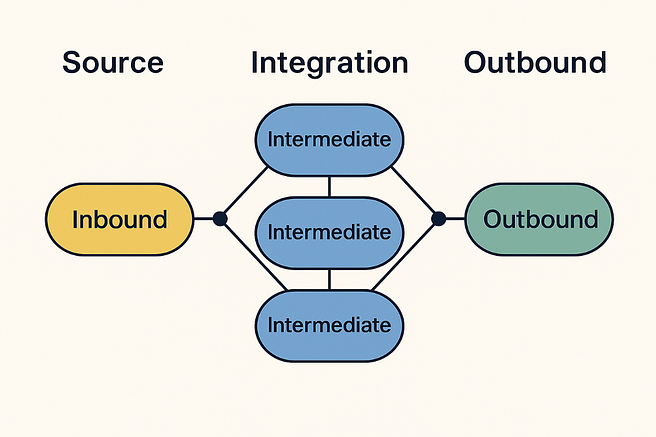
đź§© Designing Layered Data Models with Inbound, Intermediate, and Outbound Entities

A Core Design Rule in Model-Driven Data Engineering In Model-Driven Data Engineering (MDDE), data models aren’t static diagrams — they are semantic building blocks that can be connected, versioned, validated, and automated. Every model has its own role within the data platform, but what’s often forgotten is that models also need internal structure to remain maintainable as they evolve. That’s where the Inbound → Intermediate → Outbound principle comes in. It’s a simple but powerful design rule that isolates change, simplifies mappings,...
Read more
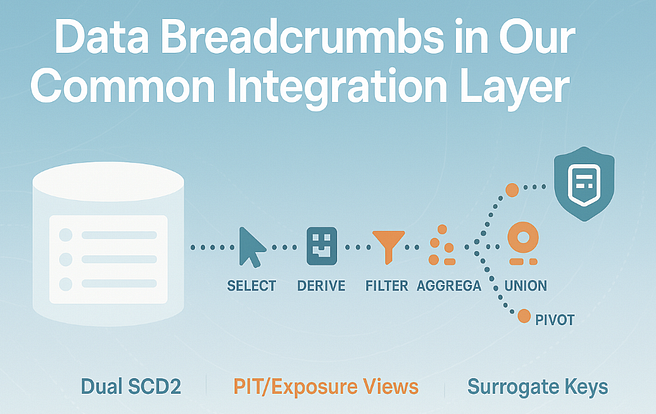
Data Breadcrumbs in the Common Integration Layer

What we’re solving, and exactly how to do it with dual SCD2, PIT/exposure views, and dbt on Databricks When we debug odd results, we don’t just need dataset-level lineage — we need a row-level story: which source snapshots fed the row and which logical steps shaped it (select, derive, filter, aggregate, union, pivot). Our integration layer is already structured around these transformation stages, as outlined in Modeling Data Transformations in Logical Steps. Data Breadcrumbs make that story portable at the row level —...
Read more

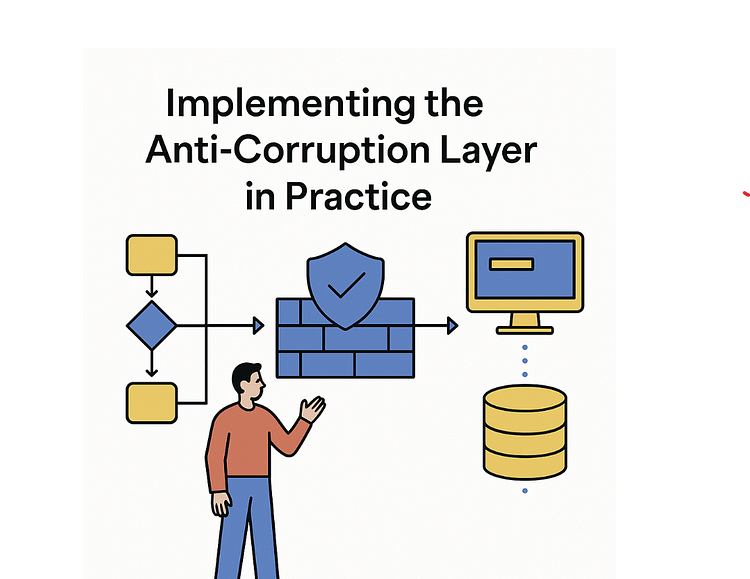
⚙️ Implementing the Anti-Corruption Layer in Practice

How to Build a Metadata-Driven Translation Layer Between Legacy and Modern Systems The Anti-Corruption Layer (ACL) isn’t just a theory from Domain-Driven Design — it’s a practical architectural component. It’s the firewall of meaning between legacy systems and your modern data platform. If the Common Integration Layer (CIL) defines your organization’s shared vocabulary, then the ACL is the translator that keeps that language uncorrupted during every integration, migration, and synchronization. This article walks through what an ACL...
Read more