Jaco van der Laan
Active filters:Data Architecture ×Clear all

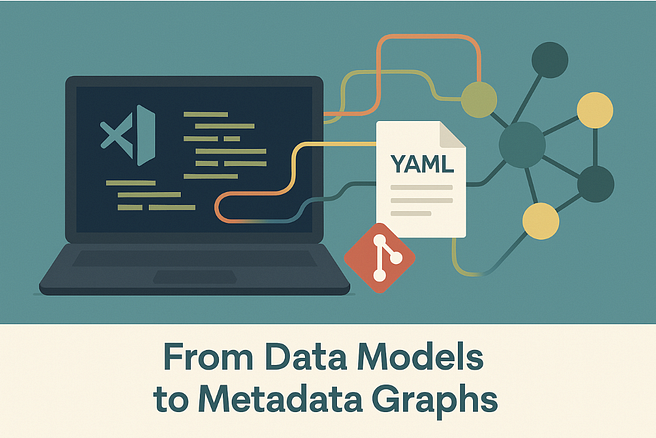
đź§© The New Landscape: From Data Models to Metadata Graphs

Series: Choosing the Right Data Modeling Tool in the Era of Metadata Engineering For decades, data modeling tools such as ERwin, PowerDesigner, and ER/Studio were at the heart of every data architecture. They offered what we needed at the time — structure, visualization, and control. But over the years, something changed. Data architectures became distributed, schema evolution accelerated, and most of our logic moved from hand-crafted SQL to metadata-driven pipelines. Today, data modeling isn’t just about drawing entities and relationships. It’s...
Read more
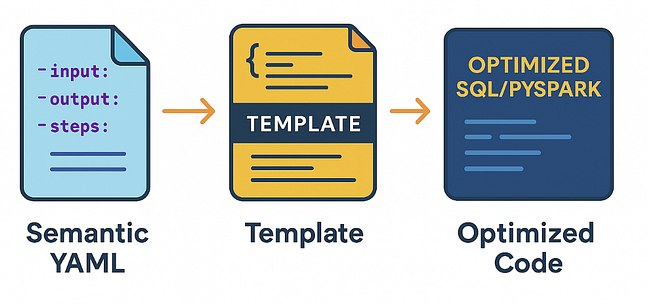
đź§© From Functional Design to Platform Optimization

How metadata templates let us separate what we build from how it runs As data engineers, we’ve learned to split complex SQL into logical, testable steps — filters, joins, derivations, aggregations. But that logical modularity doesn’t mean we must physically execute each step as a separate query. With metadata-driven design, we can describe transformations once — in YAML or another semantic format — and let platform-specific templates decide how to compile and optimize them. That...
Read more

Fact-Based Modeling Meets Metadata-as-Code — Can FCO-IM Be the Semantic Backbone of Modern Data Architecture?

💡 How the principles of Fact-Based Modeling could strengthen the next generation of metadata-driven and AI-assisted data platforms. Over the past months, much of the discussion around data modeling has focused on tools — how legacy suites compare to Git-native environments, and how AI is reshaping the way we create and maintain models. But a comment from Marco Wobben (author and long-time advocate of Fact-Based Modeling and FCO-IM) reminded me that, before any tool or automation, there must be semantic...
Read more

Metadata Mesh: The Federated Architecture for Enterprise-Wide Data Modeling

How to scale metadata governance and collaboration using domain nodes and shared APIs As organizations adopt [[metadata-driven data modeling]], a new challenge emerges: How do we connect multiple autonomous domains — each modeling its own business — into a coherent, enterprise-wide view without creating a central bottleneck? The answer is [[Metadata Mesh]] — a [[distributed metadata architecture]] inspired by the same principles as [[Data Mesh]]: [[domain ownership]], [[interoperability]], and [[product thinking]]. A metadata catalog collects models and lineage into one searchable...
Read more

Bridging Ontology and Metadata — Toward Semantic Data Platforms

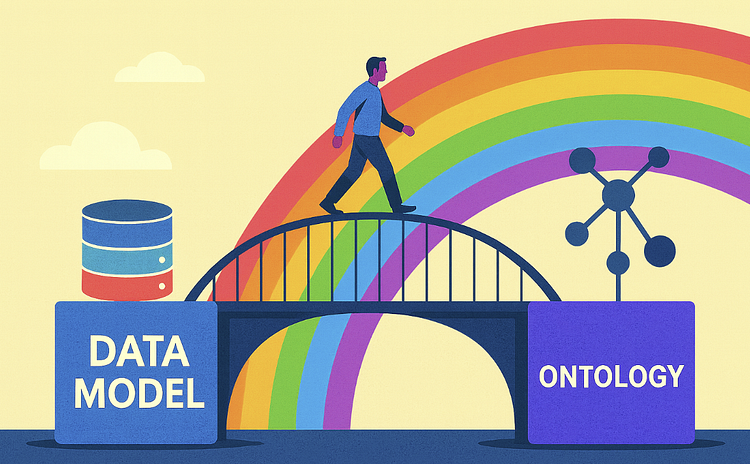
Why the future of data engineering lies in uniting structure with meaning In data engineering, we’ve long mastered the structure of data — tables, schemas, transformations, lineage. What we’ve struggled with is meaning. A recent piece by Michel Sauvage — “Ontology vs Data Model” — reignited an old but essential debate: Have we confused organizing data with understanding it? Sauvage reminds us that a data model organizes facts, while an ontology explains what those facts mean. A schema can ensure referential...
Read more

Bringing Requirement Modeling into Metadata-Driven Data Architecture

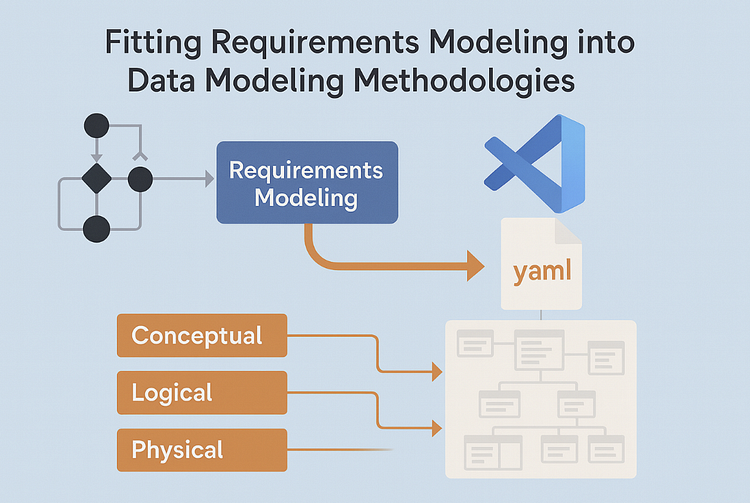
From UML and PowerDesigner roots to YAML-based modeling in VSCode Modern data architecture has evolved rapidly. We’ve moved from hand-crafted SQL to metadata-driven frameworks, where YAML files and declarative logic generate the data platform itself. We’ve learned to describe conceptual, logical, and physical models as metadata-as-code, feeding automated engines that generate tables, pipelines, and tests. But one crucial layer is often missing: Requirements. Where do business requirements live? How are they linked to conceptual entities...
Read more

🧭 Inmon, Data Vault, and Palantir Ontology — Where They Overlap (and Where They Don’t)

How historization-first, model-driven data engineering extends classic warehousing and modern semantics. 💡 This article continues from Palantir’s Ontology, Kimball’s Star Schema, and Model-Driven Data Engineering: A Comparative View, responding to reader questions about how these approaches relate to Inmon’s 3NF and Data Vault — and how they look in practice. When I compared Palantir’s Ontology and Kimball’s Star Schema, several readers asked insightful follow-ups: “An Inmon-style data warehouse is in 3NF, with entities representing business objects and...
Read more

From Semantics to AI: How Metadata Knowledge Graphs Enable Intelligent Modeling

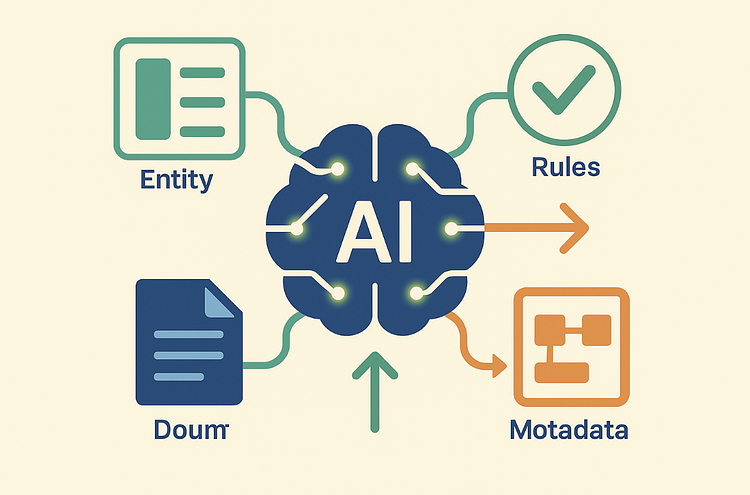
Using metadata, semantics, and AI to automate documentation and accelerate model design At this stage in the series, your metadata-driven framework has evolved into a self-aware ecosystem: YAML models define conceptual, logical, and physical layers. DuckDB catalogs and lineage graphs expose structure and quality. The semantic layer adds meaning, rules, and policy context. Now, the question is: how can we make this metadata work for us? The answer: by applying AI to interpret, generate, and...
Read more

Semantic Model, Ontology, and Knowledge Graph — Three Layers of Meaning in the Modern Data Landscape

Inspired by “Semantic Model vs Ontology vs Knowledge Graph: Untangling the Latest Data Modeling Terminology” by Cassi Hunt In recent years, the language of data modeling has grown richer — and more confusing. Terms like semantic model, ontology, and knowledge graph appear across architecture diagrams, vendor slides, and LinkedIn think pieces, often used interchangeably. Yet these concepts describe distinct — and complementary — layers of meaning in the modern data ecosystem. Understanding how they relate helps bridge business semantics with machine-readable...
Read more

The Semantic Layer of Metadata

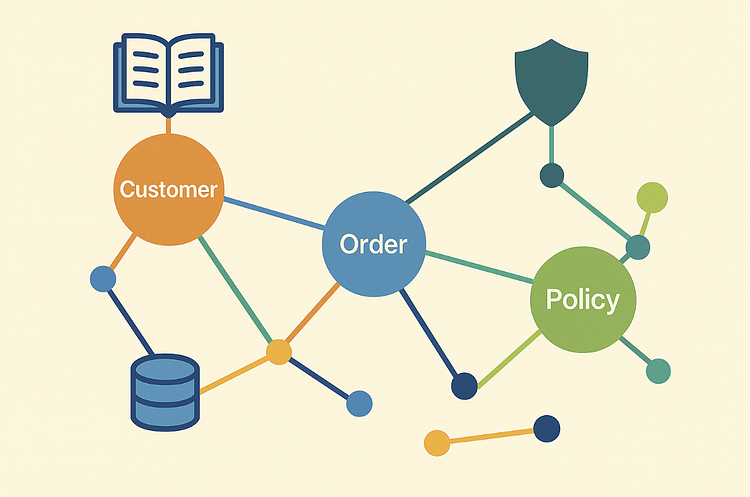
How to connect concepts, rules, and business meaning across your metadata mesh As we scale metadata-driven modeling across teams, we eventually hit a new challenge: We know how data flows — but do we know what it means? We can trace lineage and structure across thousands of tables, yet still struggle to answer basic business questions like: What exactly is a “Customer”? How does “Revenue” differ between domains? Which policies govern “Personal Data”? To solve this, we...
Read more
1 2 3 4 … 13