With reusable patterns, shared semantics, and proven structure, Len Silverston’s Universal Data Models are powerful allies in building meaningful and adaptable business data models.
Summary
Universal Data Models (UDMs), particularly those developed by Len Silverston, offer reusable, standardized templates for common business domains.
They accelerate the process of business-oriented data modeling by providing a clear and adaptable foundation.
When combined with metadata-driven mapping and model-driven engineering, UDMs reduce time-to-value, improve alignment with business semantics, and support scalable, evolvable architectures.

What Are Universal Data Models?
Universal Data Models (UDMs) are standardized, reusable data model templates that represent common business domains such as Customers, Orders, Products, Invoices, Shipments, and more. Created by Len Silverston and documented in The Data Model Resource Book, UDMs have become foundational tools for enterprise data modeling.
Some key aspects:
- Domain-neutral core models for common subject areas
- Industry-specific extensions for vertical use cases
- Attribute definitions and naming standards built on decades of practical use
- A growing ecosystem of resources, including the Universal Data Model Repository
UDMs help organizations start with best practices rather than from scratch, ensuring quality, consistency, and clarity.
Why Business-Oriented Models Matter
Business-oriented data models are more than just technical schemas. They:
- Reflect real-world business entities and events
- Use terminology that business stakeholders recognize
- Provide a shared understanding between data engineers, analysts, and domain experts
- Serve as a semantic foundation for trustworthy and transparent data transformations
The challenge is getting there — and this is where UDMs shine.
How UDMs Accelerate Business-Oriented Modeling
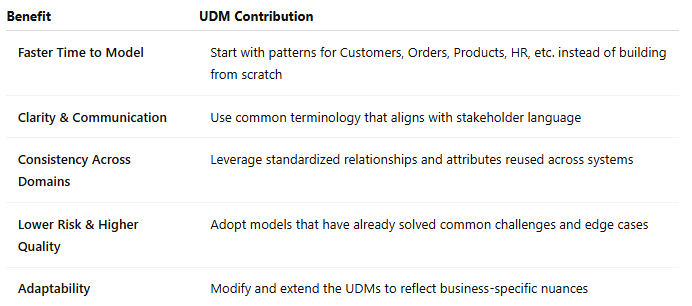
UDMs are particularly valuable when aligning across multiple teams, systems, or business units. Rather than reinventing core concepts, you adapt a trusted baseline.
A Real-World Example
Imagine you’re modeling a sales process. Instead of starting with a whiteboard, you take the UDM template for Orders:
- Entities like
Order,Order Line,Customer,Product,Shipment, andInvoiceare already defined - Relationships, keys, and status attributes are pre-modeled
- You adapt the model by adding specific fields like
Discount Tier,Promotional Code, orChannel - You document business keys like
Order NumberandCustomer IDwith definitions from the UDM
This becomes your business-oriented logical model — one that’s both technically sound and business-recognizable.
UDMs + Metadata-Driven Mapping + Automation
While UDMs give you a solid model, they become even more powerful when combined with metadata-driven practices:
- Define mapping metadata from source systems to UDM-adapted entities
- Use business key definitions as metadata to drive transformation logic
- Automate generation of SQL, views, historized tables, and lineage from model + mapping metadata
This integration fits perfectly with methodologies like Roelant Vos’ Data Engine Thinking or my own approach to model-driven data engineering. UDMs form the foundation. Metadata bridges the gap. Automation delivers at scale.
Potential Pitfalls (and How to Avoid Them)
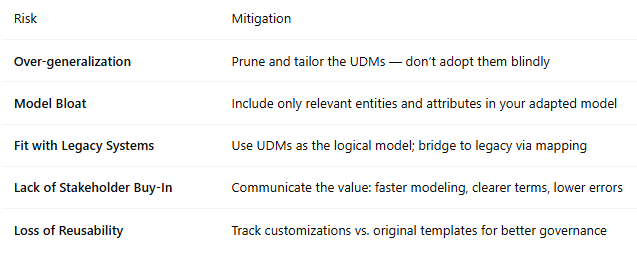
UDMs work best when treated as patterns — not prescriptions.
Conclusion
Len Silverston’s Universal Data Models have taught me the value of starting from solid, shared foundations. They allow modelers to focus on what matters most: tailoring models to reflect the unique nature of a business, while standing on the shoulders of industry-proven patterns.
Combined with metadata-driven mapping and automation, UDMs are not just theoretical tools — they are practical accelerators for business-oriented, trustworthy data platforms.
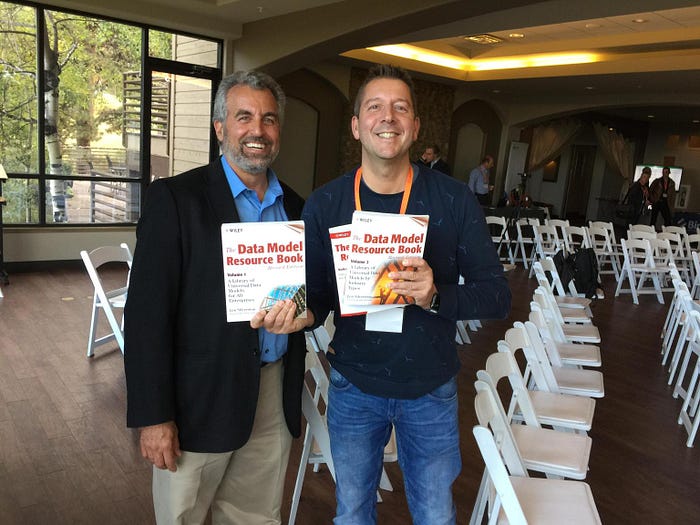
Great conference day again at Global Data Summit in Denver, Colorado! Today I met the author of some of my favorite books I have used intensively (obsessively) in the past: the Data Model Resource Books. The name of the author is Len Silverston. Len is also a renowned zen master (www.zenwithlen.com/) and personal coach. Loved his sessions and hope to meet him again! Check out the video’s on his site www.zenwithlen.com. I love the story on tigers and strawberries!
📘 Explore the UDM library: The Universal Data Model Repository
📚 Read the book: The Data Model Resource Book (Amazon)