When we historize source data, we often think the job is done: we’ve captured changes over time, stored the full feed, and made it queryable. But if you’ve ever worked with raw historized sources directly, you’ll know how messy it can be. Different naming conventions, awkward data types, ingestion metadata… it’s not something you want to expose downstream.
That’s where Source Access Views come in.
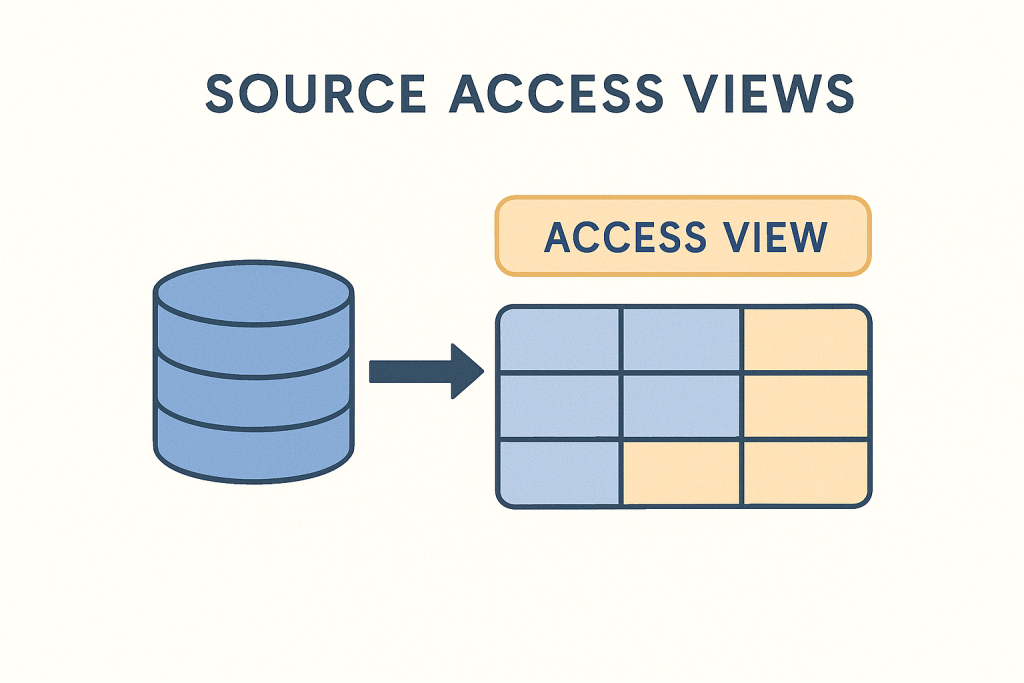
They are the front door to your historized raw sources. Their purpose is simple but powerful:
- Rename columns to follow a consistent naming standard.
- Cast data types to the right formats.
- Hide ingestion-specific metadata that doesn’t belong in the business conversation.
Why this matters
Without source access views, every downstream developer or consumer is left to deal with:
- inconsistent source column names (e.g.
CUST_ID,customerNo,CID), - varying data types (string vs. integer IDs, dates as text),
- noisy ingestion columns (
_filename,_batch_id).
The result: fragile pipelines and frustrated analysts.
By creating a thin but consistent view on top of historized raw data, we ensure:
- stability for downstream layers,
- easier lineage tracing,
- reusability across the platform.
Think of source access views as the “guardrails” for your historized source layer: you don’t transform business logic here, you just make sure the basics are clean, consistent, and query-friendly.