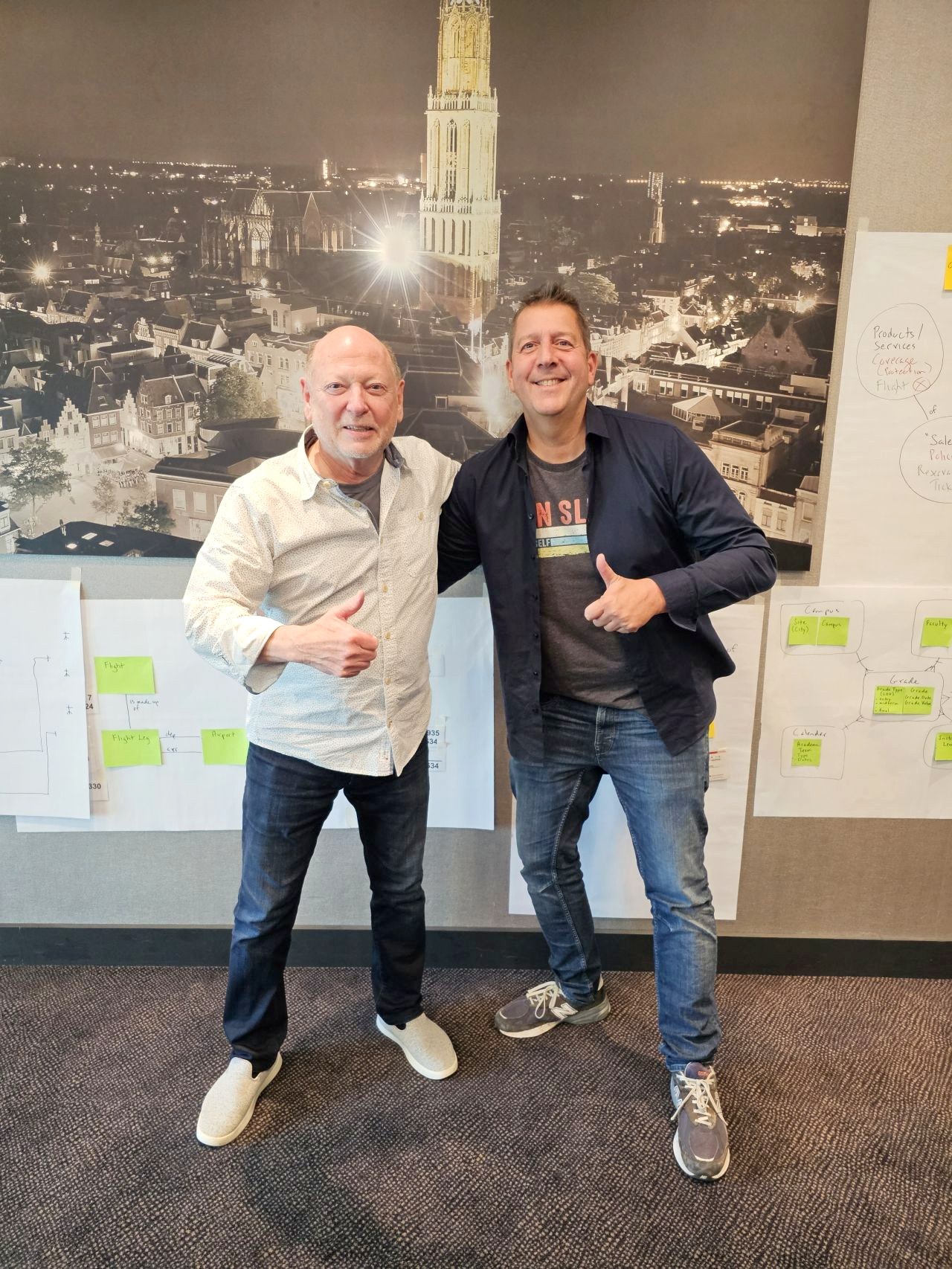
Jaco van der Laan

References & influences

Standing on good shoulders.

My approach didn’t appear from nowhere. It’s built on decades of thinking by people who shaped how we model, historize and govern data — and on collaborators I’ve built real things with. I’ve written about many of them — here’s where to find their work.

Collaboration

CrossBreeze — building Model-Driven Data Engineering together.

I’ve worked closely with CrossBreeze and its founders, Harmen Wessels and Willem Otten, on Model-Driven Data Engineering. I first met them on the Rabobank project, and later invited them to help build the MDDE framework at de Volksbank / ASN.

Their CrossModel tooling — open-source, logical-model-first, generating schemas and transformations from metadata — is MDDE in product form. A genuine meeting of minds on the same vision: structure first, generate the rest.

crossbreeze.nl →  ·  crossmodel.io →

Data Vault & Ensemble modeling

Hans Hultgren

Ensemble modeling, Data Vault

Ensemble Logical Modeling — a major influence on how I think about business-keyed, agile data models.

geneseeacademy.com →

Roelant Vos

Data Vault automation, data engine thinking

His work on the historical staging area and data-engine thinking supports a model-driven framework.

LinkedIn →

John Giles

Data Town Plan, Universal Data Vault

His Data Town Plan — a bridge between business and IT — and his Universal Data Vault thinking shaped how I connect business intent to a generalized, reusable model. I’ve written about the Data Town Plan myself.

Data Town Plan →

Patrick Cuba

Data Vault 2.0

Modern Data Vault practice and patterns — a sharp, practical voice in the temporal-modeling community.

LinkedIn →

Dirk Lerner

Temporal data, Data Vault

His work on temporal data strengthens the bi-temporal / dual-SCD2 architectures I rely on.

LinkedIn →

Lars Rönnbäck

Anchor Modeling, temporal modeling

Creator of Anchor Modeling — an elegant, agile approach to information that changes over time. A key reference for the temporal thinking behind my historization patterns.

anchormodeling.com →
Jaco van der Laan with Len Silverston, holding The Data Model Resource Book volumes
With Len Silverston, holding The Data Model Resource Book — the universal-models work that underpins my reuse-first approach.
Jaco van der Laan with Alec Sharp at a business-oriented data modeling session
With Alec Sharp — whose three-day Business-Oriented Data Modeling masterclass shaped my business-first approach.

Foundations of data warehousing

Alec Sharp

Business-oriented data modeling, concept modeling

I followed his three-day Business-Oriented Data Modeling masterclass — a major influence on my conviction that good models start with the business, not the database.

LinkedIn →

Marco Wobben

CaseTalk, FCO-IM (fact-oriented modeling)

Behind CaseTalk and a leading voice in FCO-IM — fact-based modeling that grounds conceptual models in real, verifiable facts. Someone I know personally.

casetalk.com →

Bill Inmon

Data warehousing, 3NF integration

The case for 3NF and the business language model still shapes my integration-layer thinking.

Find his work →

Ralph Kimball

Dimensional modeling

Timeless dimensional patterns that still shape modern, time-aware data platforms.

Kimball Group →

Francesco Puppini

Unified Star Schema

Inventor of the Unified Star Schema — an elegant, resilient approach to the delivery layer that solves many-to-many and drill-across cleanly. A concept I love and have written about.

LinkedIn →

Steve Hoberman

Data modeling, community

Data Modeling Zone and a body of work that keeps the craft of modeling alive.

stevehoberman.com →

Len Silverston

Universal Data Models

The Data Model Resource Book series — universal, reusable patterns that underpin my business-oriented, reuse-first modeling.

More →

Lawrence Corr

Dimensional modeling, BEAM

From whiteboards to working models — his thinking influenced how I run modeling sessions.

LinkedIn →

George McGeachie

PowerDesigner, metadata (“Metadata Junkie”)

The deepest PowerDesigner and metadata-management voice I know — his Metadata Matters work sharpened my own PowerDesigner automation and metadata thinking.

metadatamatters.com →

Larry Shiller

Metadata-first data architecture

Author of Metadata First: The Future of Data — a calm, principle-driven voice arriving at the same place I have: structure and metadata come first, the tool comes second. He generously quoted my work in the book.

LinkedIn →
Modern data & engineering

Piotr Czarnas

Data quality & observability (DQOps)

Founder of DQOps and a clear voice on data-quality frameworks. Data quality is exactly the wedge in my own work.

LinkedIn →

Simon Späti

Data engineering, technical writing

Author of the ssp.sh Data Engineering Blog — a data engineer who works the way I do: in markdown, in the open. Right at the PKM × data-engineering crossover.

ssp.sh →

Shane Gibson

AgileData, Information Product Canvas

Co-founder of AgileData and creator of the Information Product Canvas — a business-first way to capture what data should deliver. I’ve written about the canvas.

shagility.com →

Rick van der Lans

Data virtualization, architecture

His work on SuperNova / data virtualization shaped my approach to delivery and the semantic layer.

LinkedIn →

Joe Reis

Data engineering fundamentals

His principles (and Fundamentals of Data Engineering) reinforce a disciplined, model-driven approach.

LinkedIn →

Mike Ferguson

Data architecture, BDL

His Business Data Lake keynote thinking aligns with the model-driven future of data management.

LinkedIn →

Personal knowledge management

The other half of my structure.

Data architecture taught me rules and governance. PKM taught me linked, markdown-native thinking. Both turned out to be groundwork for the AI phase — the vault that organises my knowledge is now the context the model reasons over.

Nick Milo

Linking Your Thinking (LYT), Obsidian

His Linking Your Thinking approach and Maps of Content shaped how I structure a connected vault — exactly the structure that now feeds AI.

linkingyourthinking.com →

Tiago Forte

Building a Second Brain, PARA

The PARA method and the second-brain idea — capturing and organising knowledge so it compounds instead of evaporating.

buildingasecondbrain.com →

Sönke Ahrens

How to Take Smart Notes, Zettelkasten

The atomic-note, link-as-you-think discipline behind durable knowledge — the smallest unit of structure.

Smart Notes →

PKM gave me human-readable, linked structure; data architecture gave me rules and validation. AI needs both — and that convergence is where I work. More on the convergence →

What drives me

Systems, models, and a positive mindset — it’s how I’m wired.

This isn’t a reading list. It’s intrinsic to how I think and work — the same operating system in my personal life and my professional one. See the system, find the model, build the structure, stay growth-minded.

Mental models

Shane Parrish / Charlie Munger

A latticework of mental models for clearer thinking and better decisions — the habit of reaching for the right model, not the first idea.

Farnam Street →

Stephen Covey

The 7 Habits of Highly Effective People

Principle-centred effectiveness — begin with the end in mind, first things first. Structure applied to character and priorities.

The 7 Habits →

Carol Dweck

Growth mindset

Abilities grow with effort and learning. The mindset behind staying curious, reinventing, and treating every phase as a chance to grow.

Mindset →

Tim Ferriss

The 4-Hour Workweek

Designing work around life through systems, leverage and elimination — not more hours. Output over busyness.

tim.blog →

David Allen

Getting Things Done (GTD)

A trusted system so the mind is for having ideas, not holding them. Capture, clarify, organise — productivity as structure.

GTD →

Growth & systems thinking

Growth hacking · systems over goals

Build the system and the results follow. Small, compounding, measurable improvements beat heroic one-off effort.

How I apply it →

Manifestos I stand by

A few statements of principle — technical and human.

I like manifestos. A good one compresses a way of working — or a way of living — into something you can actually hold onto. These shaped mine.

Technical

The Agile Manifesto

Ways of working

The original. Value working software, collaboration and responding to change — principles I carry into how data teams should work.

agilemanifesto.org →

The DataOps Manifesto

Data ways of working

Agile principles applied to data: working analytics, treating analytics as production, monitoring quality and performance continuously.

dataopsmanifesto.org →

My own manifestos

Metadata-first · Universal Data Models · MDDE

I’ve written my own — Data Engineering Manifestos, the Metadata-First and Universal Data Models manifestos, and the MDDE Manifesto. Principles to shape the practice.

Read on Medium →

Life & psychological

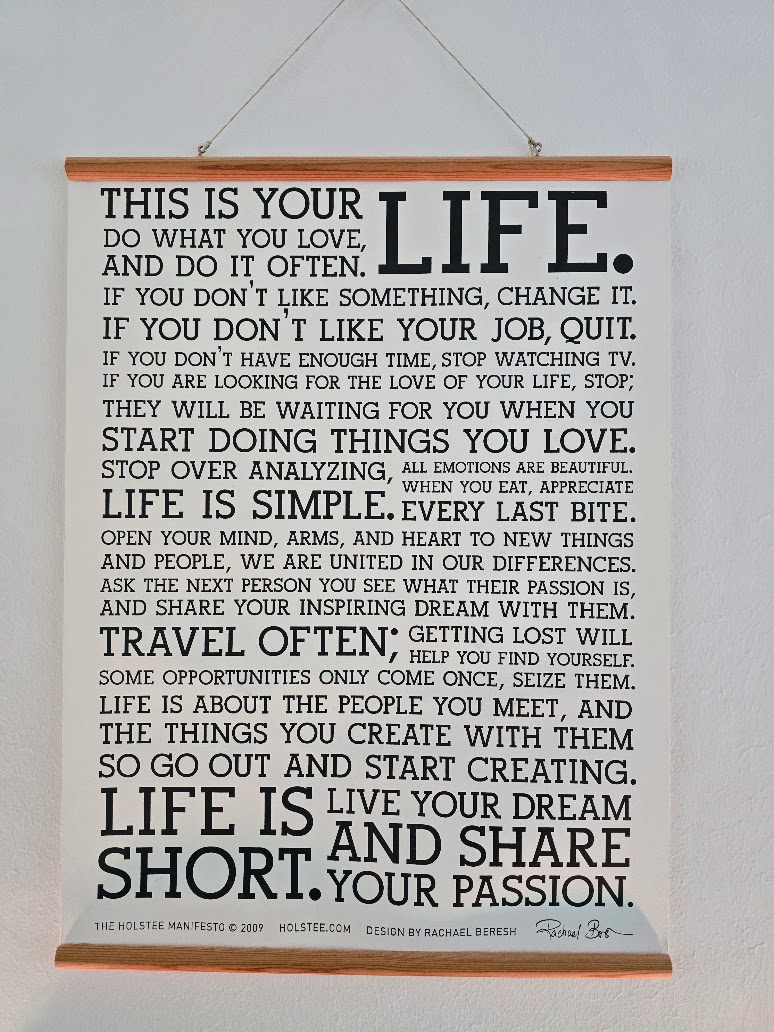
The Holstee Manifesto poster on Jaco's wall

The Holstee Manifesto

“This is your life.”

The one that guides my life — it hangs on my wall. “This is your life. Do what you love and do it often. If you don’t like something, change it. If you don’t like your job, quit.”

It’s the spirit behind my own pivot — and a reminder that the same instinct for living well drives the way I work.

holstee.com →

Shared influences? Let’s talk.

If these names are on your shelf too, we’ll get along.

Start a conversation